Trust, Institutions and Maslow's pyramid
If the Supreme Leader of Iran Ayatollah Ali Khamenei is Godfather, then General Qassem Soleimani was Tom Hagen. In any one-man shows, whether in drama or, real life, the protagonist/ antagonist is always supported by a solid 'right-hand'. This right-hand implements everything that the main guy wants. And, the right-hand doesn't blink in following through his boss' order. Gen. Soleimani was more like Squealer and Boxer of Animal Farm with the former's mind and later's ability. He was fighting the United States on multiple fronts. As the de facto number 2 in Iran, the proxy wars that he was waging were crucial for the Iranian Islamic republic's survival. The General swore on the Ayatollah and his Iran.
Incidentally, Iran witnessed major protests on the streets recently on the levels never seen since 1976, when the country became the Islamic Republic by overthrowing the Shah of Iran. Gen. Soleimani used his Quds forces to violently disperse the recent protests. These protests were signs that people have become weary of the regime and its promises. The Iranian leadership knew all too well, what regime changes were. For the General, the proxy wars he waged in the middle east were not just to further the Iranian regime's cause, but to divert his people from the economic fallout of American sanctions. But, despite all his efforts, disenchantment was growing in Iran. It turns out, his death, ironically, has today united his country. Everybody on the streets is mourning for him.
This made me wonder, what makes people trust and distrust leaders, institutions and nations? The Iranian leadership is using the death of Gen. Soleimani to whip up nationalist passions and quell disenchantment remarkably fast.
But the Iranian leaders seem to have missed a fundamental tenet- nationalism or, the more hyper form of it is only tenable as long as people gain something from it. After all, everything is a form of trust- the banks, the corporations, the nations, and democracies. Why would someone trust something? I will trust God as long as that idea allows me to do something meaningful and be someone worthful. Human trust in something is clearly directly related to the human propensity to raise on Maslow's pyramid through that something. Whatever I trust, must allow me to work up the pyramid. Else, I discard. Every relic of ancient religions, empires, and institutions is an example of this fundamental principle. Every major empire that perished on the sands of time is representative of this principle.
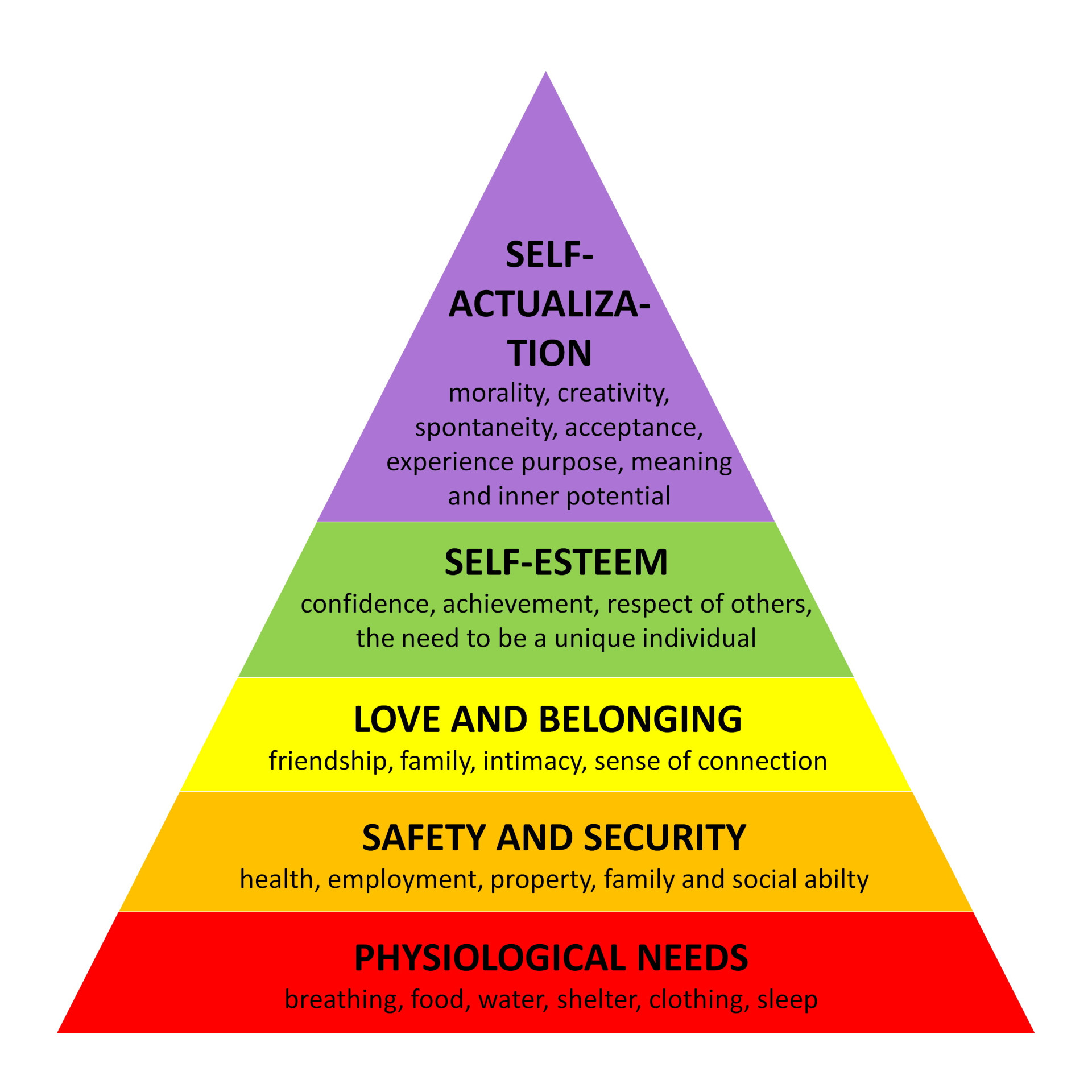
(Maslow's Pyramid- simplepsychology.org)
Trust is like a pillar. The trust of all the stakeholders of an institution is what keeps the institution up and tall. Every time the institution fails to deliver, a pillar is broken. This trust is upon the agreement that the institution will fulfill the human needs it was supposed to address. Governments, especially democratic, are meant to fulfill physiological and safety needs in Maslow's pyramid. Every gun violence in America fritters away the trust that the government will provide safety to its citizens. Every forest fire and unseasonal weather chips off the trust that the government will provide physiological safety to stakeholders as the common citizenry is displaced and unemployed. In India, governments, largely run by bureaucrats, have forgotten that they are responsible for the people of the country. This applies to governments of all parties. But for Bollywood's and cricket's distraction that there are no massive protests across India.
Around the world, we read about 'people's movements' to oust governments, CEOs, religious leaders and others. There are protests in Iraq, France, Hong Kong, the US, Google, Amazon and so on. One may wonder why is there such a sudden outburst of people on the streets fighting against one thing or another. For that, we must segway a little to psychology and anthropology.
As you can see, the figure above represents what is called Maslow's Pyramid. According to Abraham Maslow, human needs can be categorized into five principle needs as described in the figure. Here's the interesting point- humans have created institutions around each of the needs. For example, to fulfill our physiological and safety needs we have created banks, industries, cooperatives, and countries. To fulfill our emotional needs we created family and relationships and made them sacrosanct. To fulfill our esteem needs we created meritocratic and marshal sports. Similarly, religion was to provide us with self-actualization and transcendent experiences.
For years many of these institutions worked just fine. Only our ways of governance changed. From initially believing in the leadership of strongmen in the tribe to now governing democratically, governance, for one, underwent a major evolution. Then, democracy spread rapidly around the world as an idea and everything looked like democracy was working just fine until now when the proletariat is up in arms (placards essentially) again. For years, the common citizenry suffered massively under whatever institution was enforced on them. Their form of protest was more indirect. Whenever a king ruled miserably and was not able to fulfill any of the needs of his subjects, they merely went meek. The people became supportive of another king. The king and his retinue of servants were only relevant as long they provided reasonable security, law &order, and economic well being to his subjects. Only rarely was a king brutal and lived to see his whole life being a king of the same subjects. People's reliance on an institution is tantamount to the organization's fulfillment of some, or the other needs of the majority of stakeholders. People continued keeping their trust in the institution only for so long. The moment the institution failed to deliver on any of the human's needs, trust was broken and soon the institution will be discarded. Buddhism was once the dominant religion in the Indian sub-continent. However, very soon, the religion lost its space to Hinduism. Buddhism lost out so much from the Indian mind space that British archaeologists had to discover the origins of the religion. Part of the reason for this decline was how Buddhism and its leaders naively ignored the three important deficiency needs of Maslow's pyramid- physiological, safety and emotional. The almost radical enforcement of monkhood and asceticism meant that the majority of followers had to forego these needs to join the Buddhist circle of life. The religion was soon sent down the popularity path.
Still, further, some institutions not only failed to provide the Maslow needs, but also dragged humans into suffering. Let's just call this the 'Inverse Maslow's Pyramid.' Inverse Maslow's Pyramid has anti-needs. When institutions abet these anti-needs, we see those institutions fall as fast as quicksand. If trust is at the center of survival of an institution, then distrust is at the center of the storm that shall destroy it. The Inverse Maslow's Pyramid is roughly presented below-

Incidentally, Iran witnessed major protests on the streets recently on the levels never seen since 1976, when the country became the Islamic Republic by overthrowing the Shah of Iran. Gen. Soleimani used his Quds forces to violently disperse the recent protests. These protests were signs that people have become weary of the regime and its promises. The Iranian leadership knew all too well, what regime changes were. For the General, the proxy wars he waged in the middle east were not just to further the Iranian regime's cause, but to divert his people from the economic fallout of American sanctions. But, despite all his efforts, disenchantment was growing in Iran. It turns out, his death, ironically, has today united his country. Everybody on the streets is mourning for him.
This made me wonder, what makes people trust and distrust leaders, institutions and nations? The Iranian leadership is using the death of Gen. Soleimani to whip up nationalist passions and quell disenchantment remarkably fast.
But the Iranian leaders seem to have missed a fundamental tenet- nationalism or, the more hyper form of it is only tenable as long as people gain something from it. After all, everything is a form of trust- the banks, the corporations, the nations, and democracies. Why would someone trust something? I will trust God as long as that idea allows me to do something meaningful and be someone worthful. Human trust in something is clearly directly related to the human propensity to raise on Maslow's pyramid through that something. Whatever I trust, must allow me to work up the pyramid. Else, I discard. Every relic of ancient religions, empires, and institutions is an example of this fundamental principle. Every major empire that perished on the sands of time is representative of this principle.
(Maslow's Pyramid- simplepsychology.org)
Trust is like a pillar. The trust of all the stakeholders of an institution is what keeps the institution up and tall. Every time the institution fails to deliver, a pillar is broken. This trust is upon the agreement that the institution will fulfill the human needs it was supposed to address. Governments, especially democratic, are meant to fulfill physiological and safety needs in Maslow's pyramid. Every gun violence in America fritters away the trust that the government will provide safety to its citizens. Every forest fire and unseasonal weather chips off the trust that the government will provide physiological safety to stakeholders as the common citizenry is displaced and unemployed. In India, governments, largely run by bureaucrats, have forgotten that they are responsible for the people of the country. This applies to governments of all parties. But for Bollywood's and cricket's distraction that there are no massive protests across India.
Around the world, we read about 'people's movements' to oust governments, CEOs, religious leaders and others. There are protests in Iraq, France, Hong Kong, the US, Google, Amazon and so on. One may wonder why is there such a sudden outburst of people on the streets fighting against one thing or another. For that, we must segway a little to psychology and anthropology.
As you can see, the figure above represents what is called Maslow's Pyramid. According to Abraham Maslow, human needs can be categorized into five principle needs as described in the figure. Here's the interesting point- humans have created institutions around each of the needs. For example, to fulfill our physiological and safety needs we have created banks, industries, cooperatives, and countries. To fulfill our emotional needs we created family and relationships and made them sacrosanct. To fulfill our esteem needs we created meritocratic and marshal sports. Similarly, religion was to provide us with self-actualization and transcendent experiences.
For years many of these institutions worked just fine. Only our ways of governance changed. From initially believing in the leadership of strongmen in the tribe to now governing democratically, governance, for one, underwent a major evolution. Then, democracy spread rapidly around the world as an idea and everything looked like democracy was working just fine until now when the proletariat is up in arms (placards essentially) again. For years, the common citizenry suffered massively under whatever institution was enforced on them. Their form of protest was more indirect. Whenever a king ruled miserably and was not able to fulfill any of the needs of his subjects, they merely went meek. The people became supportive of another king. The king and his retinue of servants were only relevant as long they provided reasonable security, law &order, and economic well being to his subjects. Only rarely was a king brutal and lived to see his whole life being a king of the same subjects. People's reliance on an institution is tantamount to the organization's fulfillment of some, or the other needs of the majority of stakeholders. People continued keeping their trust in the institution only for so long. The moment the institution failed to deliver on any of the human's needs, trust was broken and soon the institution will be discarded. Buddhism was once the dominant religion in the Indian sub-continent. However, very soon, the religion lost its space to Hinduism. Buddhism lost out so much from the Indian mind space that British archaeologists had to discover the origins of the religion. Part of the reason for this decline was how Buddhism and its leaders naively ignored the three important deficiency needs of Maslow's pyramid- physiological, safety and emotional. The almost radical enforcement of monkhood and asceticism meant that the majority of followers had to forego these needs to join the Buddhist circle of life. The religion was soon sent down the popularity path.
Still, further, some institutions not only failed to provide the Maslow needs, but also dragged humans into suffering. Let's just call this the 'Inverse Maslow's Pyramid.' Inverse Maslow's Pyramid has anti-needs. When institutions abet these anti-needs, we see those institutions fall as fast as quicksand. If trust is at the center of survival of an institution, then distrust is at the center of the storm that shall destroy it. The Inverse Maslow's Pyramid is roughly presented below-

The classification is rough segregation of the anti-needs. However, most of the protests, mass sieges, and regime changes can be traced to any of these five categories. For example, the Hong Kong protests can be rooted in disrespecting the people of Hong Kong by China and the physical violence and shadow police.
When people are disrespected in any institution, be it a company or, a country, there is bound to be resistance from different sections of societies. The disrespect can be of the people's mandates, poll promises, or fundamental principles. Trolling and abuse are more of a digital format of the disrespect taken to the extreme.
When in any country, violence and shadow policing starts making their presence felt, they are signs of imminent catharsis of conscience. Shadow police operate above law, thereby promoting distrust. As soon as seeds of distrust are sown, the battleground institutions are counting their death. Violent bondage is how the terrorist organization ISIS operated in Iraq and Syria. Despite declaring the 'caliphate' it soon lost almost everything it once had including its leader. Violent bondage is akin to how we treat the chicks and pigs in a slaughterhouse. Genocidal need not necessarily mean genocide. Even tendencies of leaders/ governments promoting exclusionary ways of life by abusing/ disturbing a particular race or community are itself signs of whirlpool and destruction.
General Soliemani's death took Iranian people from Inverse Maslow's Pyramid to the original Maslow's pyramid. Before his death, the Iranian regime was using violence and coercion to quell distrust. This only stirred further distrust. Post General Soliemani's death, the proletariat of Iran derived enormous esteem in the nation. Suddenly, people derived enormous pride in the idea of Iran for which Gen. Soliemani died. Pride is pretty high above in Maslow's pyramid and stronger glue. If US President Donald Trump wanted to undertake a regime change by killing Gen. Soleimani, his move definitely back-fired. But, if Prez Trump wanted to divert his own people from the disrespect and trolling that was happening a result of impeachment and as well glue them to American nationalism, he may be successful, provided no war takes place before presidential elections. But, Iranian leadership's enthusiasm will be short-lived. Because without first fulfilling the basic needs of its people, the leadership cannot sustain merely on pride and prejudice surrounding hyper-nationalism.
Moving further, humans built marriage as an institution to further their emotional needs, primarily. But, marriages today are failing. Increasingly, youth (urban) today no longer believe in marriage as an institution. The reason is simple- marriage as an institution is failing to provide any of the human needs it was supposed to churn out. That doesn't mean I am recommending the disbanding of marriage as an institution. But, couples need to figure out ways to churn out some needs that their marriage can satisfy long-term. This could be a solution for the long-term sustainability of marriage.
Similarly, religion as an institution is increasingly ceding space to Hollywood and Bollywood (I mean movie industry). Religion no longer provides anything that it once promised its adherents. Even many believers are passive, reluctant believers.
For any institution to work for its stakeholders, it must be able to fulfill some or, the other human needs as broadly categorized by Abraham Maslow.
"In wartime, truth is so precious that she should always be attended by a bodyguard of lies." - Winston Churchill
Comments
Post a Comment